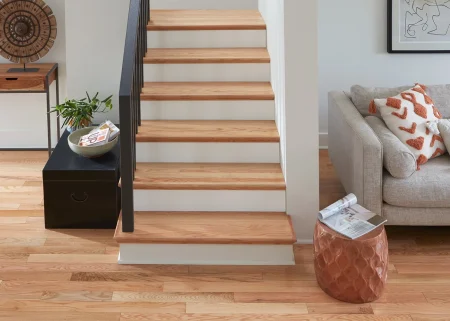




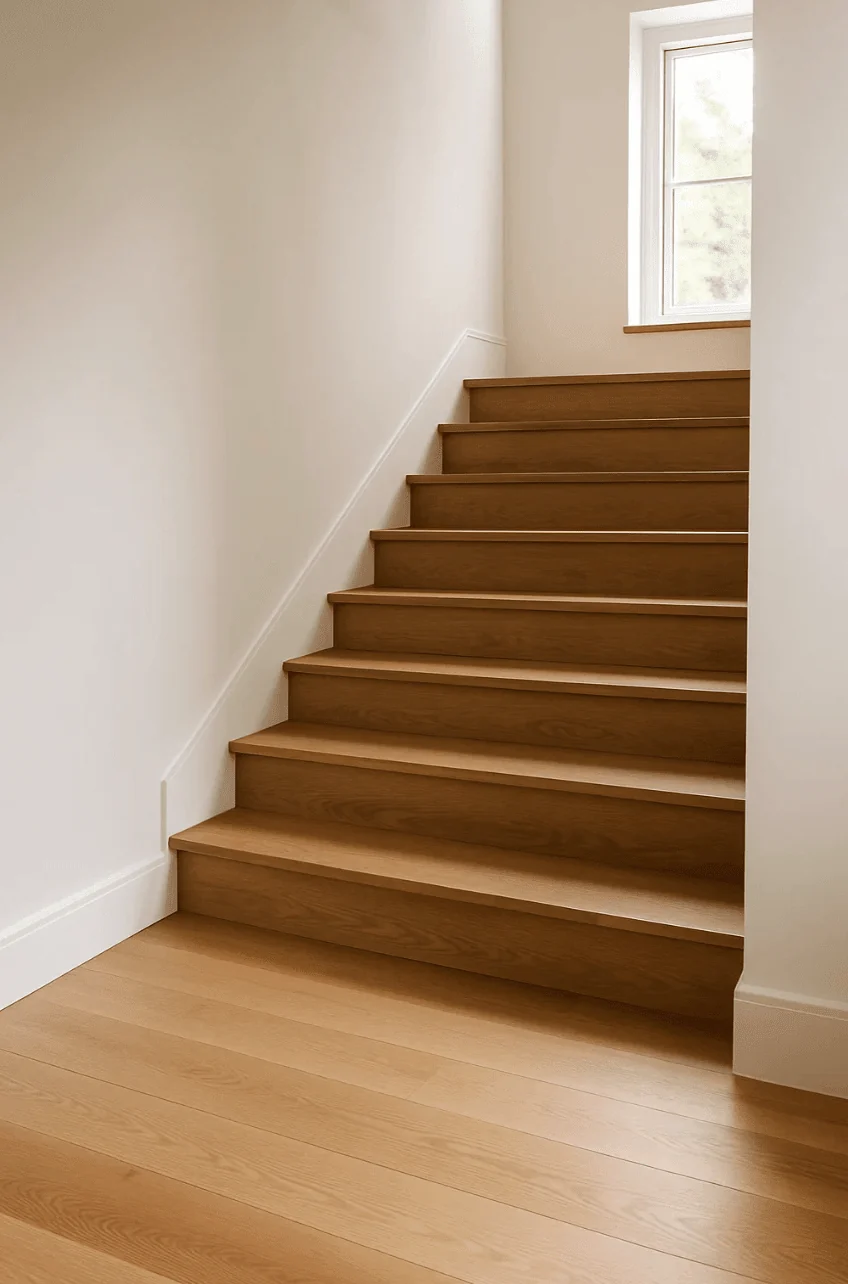
Stairs connect more than one floor of a building; they also connect visible materials, colors, and architectural details. When white oak stair treads meet white oak flooring, designers and contractors must decide whether the two surfaces should closely match or create a controlled contrast. That decision affects the stain, grain selection, sheen, risers, landings, and railing package. Addressing these details before ordering helps flooring dealers, installers, and design professionals present a more consistent result to the client.
Should the Stairs Match the Floor Exactly?
An exact match may sound like the safest direction, but color and grain can vary between boards, production runs, cuts, and component types. Stair treads are also viewed at different angles from flooring, which changes how light reflects from the surface.
Project teams generally have two sound design directions:
- Close coordination: Select the same species, similar color range, and comparable sheen for a connected appearance.
- Planned contrast: Use a darker or lighter stair finish that clearly relates to another element, such as the handrail, cabinetry, or trim.
The difficult result is an unintended near-match. Two finishes that are almost the same may appear mismatched when placed side by side. If a close match cannot be achieved, a deliberate contrast often looks more purposeful.
Why Are Undertones More Important Than Stain Names?
Finish names are not standardized across manufacturers. One company’s “natural” finish may look warmer, cooler, or more amber than another company’s version. Comparing the actual samples is more reliable than comparing product names.
When reviewing white oak finishes, look for undertones such as:
- Warm beige or honey
- Neutral tan
- Soft brown
- Gray or taupe
- Muted olive tones within the grain
A warm floor beside a cool gray tread may create a stronger contrast than expected. Nearby paint, stone, metal, and cabinetry can also make the wood appear warmer or cooler.
How Do Grain and Grade Affect the Match?
Color is only one part of material coordination. White oak is known for its visible grain and ray patterns, but its appearance changes with board selection and cut. A floor with lively grain may not relate well to treads selected for a quieter, more uniform appearance unless that difference is intentional.
Review the following characteristics before approval:
- Grain movement: Straight, open, or varied grain creates different visual rhythms.
- Color range: Natural boards may include lighter and darker areas.
- Character marks: Knots and mineral streaks may be present depending on grade.
- Board cut: Plain-sawn, quarter-sawn, and rift-sawn material display grain differently.
- Component size: A wide tread can reveal more variation than a narrower flooring plank.
Samples should represent the acceptable range rather than one selected board. This helps clients understand the variation expected across the staircase.
What Other Stair Elements Need Coordination?
The tread does not stand alone. Its appearance is shaped by the parts around it, including:
- Painted or stained risers
- Matching or contrasting landings
- Nosing profile and projection
- Newel posts and handrails
- Wood or metal balusters
- Skirt boards and wall trim
- Flooring transitions at the top and bottom
White risers emphasize white oak stair treads, while stained risers create a fuller wood appearance. A dark handrail can support a contrasting finish, and black metal balusters may move the composition toward a contemporary style. Review these decisions together instead of selecting each item separately.
How Should Samples Be Reviewed?
Samples should be examined at the property whenever possible. Showroom lighting, computer screens, and photography can alter the perceived color of wood.
For a reliable review process:
- Place flooring and tread samples directly beside each other.
- Check them in natural daylight and installed artificial lighting.
- View the samples horizontally and at the expected stair angle.
- Compare them with paint, railing, and cabinetry samples.
- Record the approved species, finish, sheen, and acceptable variation.
Written approval gives dealers, contractors, and clients a common reference if questions arise during installation.
What Must Be Confirmed Before Ordering?
Even a well-matched finish cannot correct an incomplete stair specification. The installer or builder should confirm:
- Tread width, depth, and thickness
- Open or closed stair layout
- Left, right, or double returns
- Nosing shape and dimensions
- Riser and landing materials
- Required quantities and field allowance
- Existing framing and substrate condition
- Applicable building-code requirements
Final measurements should come from the actual staircase rather than general plans when site conditions may have changed.
Bring the Stair and Flooring Selections Together
Coordinating white oak stairs with hardwood flooring requires more than choosing the same species name. Undertone, grain, grade, sheen, surrounding materials, lighting, and field dimensions all influence the finished result. Early sample review and accurate specifications give every project partner a clearer basis for approval. To explore prefinished hardwood options and plan the right tread package for your next residential or trade project, visit Wood Stair Co and discuss your staircase requirements with the team.