



Rooms at the end of long duct runs may receive less heating or cooling than areas closer to the air handler. Duct length, bends, friction, and poor branch design can all reduce delivered airflow. An air duct booster fan can provide additional air movement inside a selected duct branch, but it should be installed only after the underlying airflow problem has been properly assessed.
How Does an Air Duct Booster Fan Work?
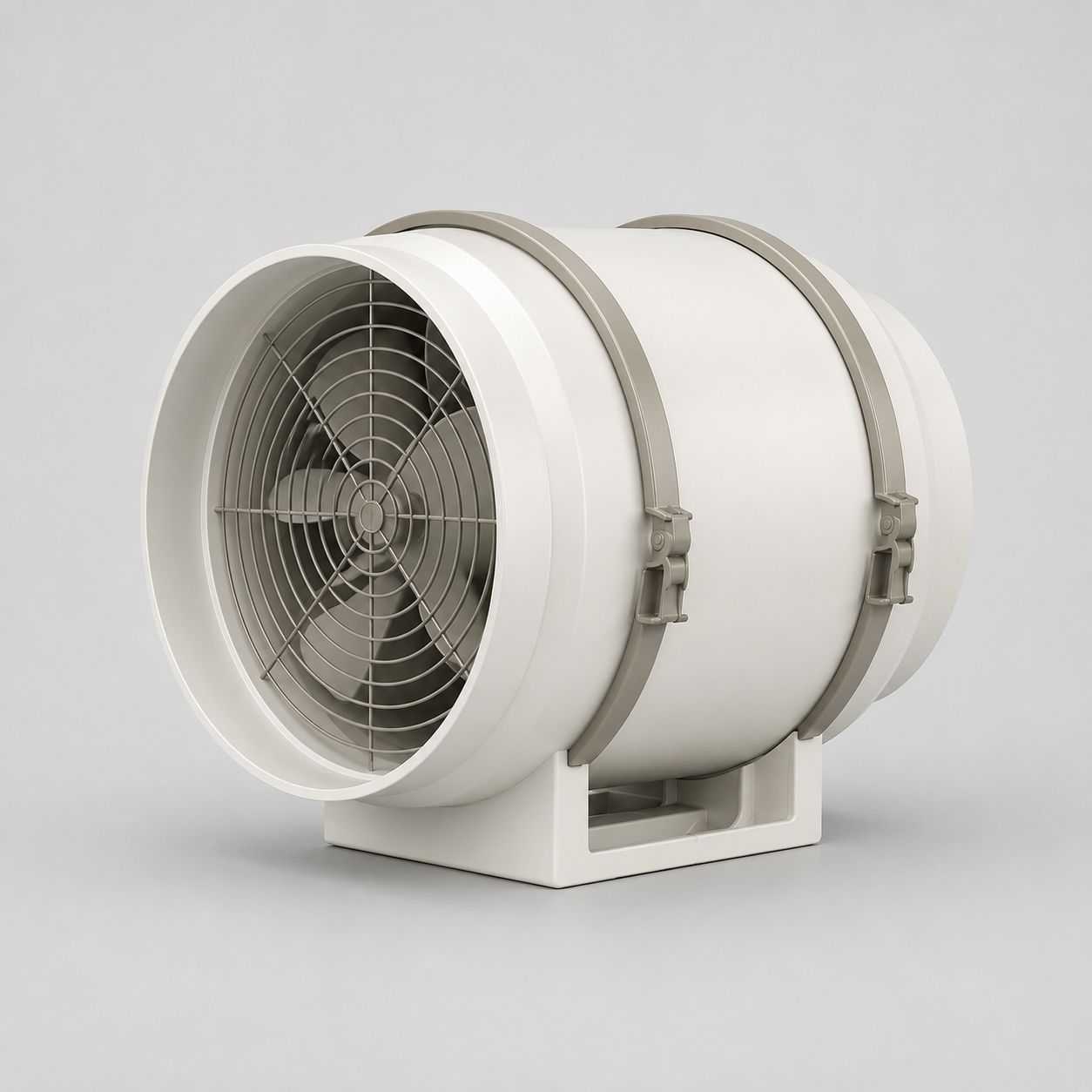
An air duct booster fan is installed inside or between sections of ductwork. Its motor-driven blades assist the movement of air through the branch when the central HVAC blower is operating. Unlike a register-mounted fan, an inline model works within the duct and may support airflow to one or more vents connected to that branch.
The fan does not create heated or cooled air. It helps move air already supplied by the central system. This distinction matters because the product cannot compensate for a furnace, heat pump, or air conditioner that lacks sufficient capacity.
Depending on the installation, the fan may be controlled by a switch, temperature sensor, pressure sensor, or relay connected to HVAC operation. The selected control method should allow the booster to run when conditioned air is available.
When Is an Inline Fan Appropriate?
A booster fan can be useful when airflow is consistently weak in a specific branch, especially when that branch is unusually long or serves a distant addition. It may also be considered when rebuilding the duct route would require opening finished walls or ceilings.
Possible applications include:
- A room addition far from the main trunk
- An upper-floor branch with weak airflow
- A workshop supplied by a long duct
- A finished basement room with limited delivery
- Multiple registers connected to one underperforming branch
The best candidates still receive some conditioned air before the fan is installed. If there is no airflow, the duct may be blocked, disconnected, crushed, or controlled by a closed damper.
Inspect the Existing HVAC System First
Installing a fan before checking the system can hide the actual cause of the problem. Begin with the air filter, blower operation, supply registers, return grilles, and balancing dampers. Accessible ducts should be inspected for loose joints, damage, leakage, and poor transitions.
Contractors should also review whether the central equipment is supplying the required airflow. If every room has weak delivery, adding a booster to one branch will not correct the main issue.
A room can also feel uncomfortable because of inadequate insulation, window leakage, solar heat gain, or an obstructed return-air path. These building conditions may need to be addressed along with the duct system.
Take Airflow and Pressure Measurements
Professional testing provides a clearer basis for fan selection. Airflow at the affected register can be compared with other outlets, while static-pressure readings can reveal excessive resistance within the system.
Measurements may help answer several questions:
- Is the central blower operating within its intended range?
- Does the branch receive enough air at the main trunk?
- Is pressure lost through a restrictive duct section?
- Will an inline fan affect airflow in nearby branches?
- Can the existing duct handle additional velocity?
Without these checks, a fan might pull air away from other rooms or create unwanted pressure changes.
Match the Fan to the Duct
Measure the duct diameter before choosing a model. An inline fan should match the duct size or be connected with suitable transitions. Poorly designed transitions can create turbulence, pressure loss, and additional noise.
Fan selection should also consider airflow capacity, operating pressure, temperature limits, installation orientation, and access requirements. A larger motor is not automatically better. Too much airflow can cause whistling at registers, drafts, or an imbalance elsewhere in the system.
Review the fan’s performance information and compare it with the branch conditions. When calculations or electrical work fall outside the installer’s experience, consult a qualified HVAC professional.
Plan the Fan Location and Controls
The fan should be installed where the duct is accessible for wiring, inspection, cleaning, and eventual replacement. It must be securely supported rather than relying on thin duct material to carry its weight.
Placement should allow adequate straight duct on either side when required by the manufacturer. Installing a fan immediately beside a sharp elbow, restrictive fitting, or loose transition may reduce performance and increase sound.
The electrical connection must comply with local requirements. Controls should prevent the fan from operating unnecessarily when the HVAC system is off. Contractors must also provide a safe means of disconnecting power before service.
Control Noise and Vibration
Inline fans can transmit mechanical vibration through metal ducts. Secure mounting, properly fitted connectors, and sound-control components can reduce the amount of noise carried into occupied rooms.
Listen for rattling, humming, or whistling after installation. These sounds may indicate loose fasteners, excessive fan speed, restrictive grilles, or inadequate duct support. Correcting the source is preferable to covering the noise with insulation alone.
Verify Performance After Installation
Test airflow at the affected registers and compare the findings with the readings collected before installation. Confirm that neighboring rooms have not lost significant airflow and that the central equipment continues to operate normally.
The property owner should receive basic operating, cleaning, and inspection instructions. Periodic checks can identify dust buildup, unusual motor sounds, loose connections, or changes in airflow.
An inline booster fan can be a practical answer for a specific weak duct branch when it is properly sized, placed, and controlled. Visit Suncourts to explore inline duct fans and other airflow products for residential HVAC installations, renovation projects, and professional comfort assessments.