


Tropical artificial flowers can instantly bring warmth, color, and a vacation-inspired feel into your home. From bold birds of paradise to exotic orchids and vibrant hibiscus, tropical artificial flowers make it possible to create a lush look without the watering, pruning, or seasonal limitations of fresh blooms. However, tropical decor can quickly feel excessive if too many bright colors, oversized arrangements, or competing patterns are used in the same space.
The secret is balance. By choosing the right flowers, colors, containers, and placement, you can create a sophisticated tropical-inspired interior that feels fresh and intentional rather than cluttered.
What Makes Tropical Floral Decor Look Overdone?
Tropical flowers naturally make a statement. Their large leaves, vibrant colors, and distinctive shapes can become the focal point of a room without much effort.
Decor can start looking overdone when you:
- Use too many different flower varieties together
- Combine several bright colors without a cohesive palette
- Fill every available surface with floral arrangements
- Choose arrangements that are too large for the room
- Mix tropical flowers with too many competing patterns
- Place multiple statement arrangements close together
- Use identical arrangements throughout the entire home
Instead of trying to create a tropical jungle in every room, think of tropical flowers as accent pieces.
1. Start With One Statement Arrangement
One of the easiest ways to incorporate tropical flowers is to make a single arrangement the focal point of a room.
For example, a large arrangement of birds of paradise can work beautifully in:
- A living room corner
- An entryway
- Beside a console table
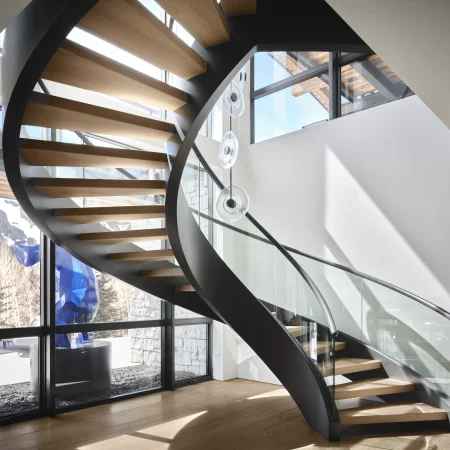
- An open staircase area
- A dining room
- A home office
Allow the arrangement to have visual breathing room around it. When one large arrangement has enough space, it looks intentional and sophisticated.
Try the 1-2-3 rule
For a simple approach, use:
1 statement arrangement + 2 supporting accents + plenty of open space.
This prevents every decorative element from competing for attention.
2. Keep Your Color Palette Under Control
Tropical flowers are often associated with vibrant shades such as orange, pink, yellow, red, and purple. While these colors can look beautiful, using all of them at once can overwhelm a neutral interior.
Instead, choose a limited palette.
Some elegant combinations include:
White + Green + Soft Yellow
A fresh, understated tropical look.
Coral + Green + Cream
Warm and welcoming without being too colorful.
Pink + White + Green
Soft enough for bedrooms and living spaces.
Orange + Green + Neutral Beige
A more energetic look that works well in modern interiors.
Purple + White + Deep Green
A sophisticated combination for formal spaces.
If your room already contains colorful furniture, artwork, or rugs, consider choosing tropical flowers in neutral or complementary shades.
3. Use Greenery to Balance Bright Flowers
One of the best ways to make tropical flowers look more natural is to incorporate greenery.
Large tropical leaves can soften vibrant blooms while creating visual continuity between the flowers and the rest of the room.
Consider pairing flowers with foliage inspired by:
- Monstera leaves
- Palm leaves
- Banana leaves
- Philodendron leaves
- Ferns
- Eucalyptus-style greenery
Greenery also gives an arrangement more volume without requiring additional brightly colored flowers.
The key is proportion
You don’t need dozens of flowers to create a full arrangement. A few statement blooms surrounded by carefully positioned greenery can have a much greater visual impact.
4. Choose the Right Vase or Container
The container plays a major role in determining whether a tropical arrangement feels sophisticated or overly decorative.
If the flowers are already bold, choose a relatively simple vase.
Good choices include:
- Matte white ceramic
- Clear glass
- Natural stone
- Neutral pottery
- Woven baskets
- Simple black containers
- Natural wood-inspired planters
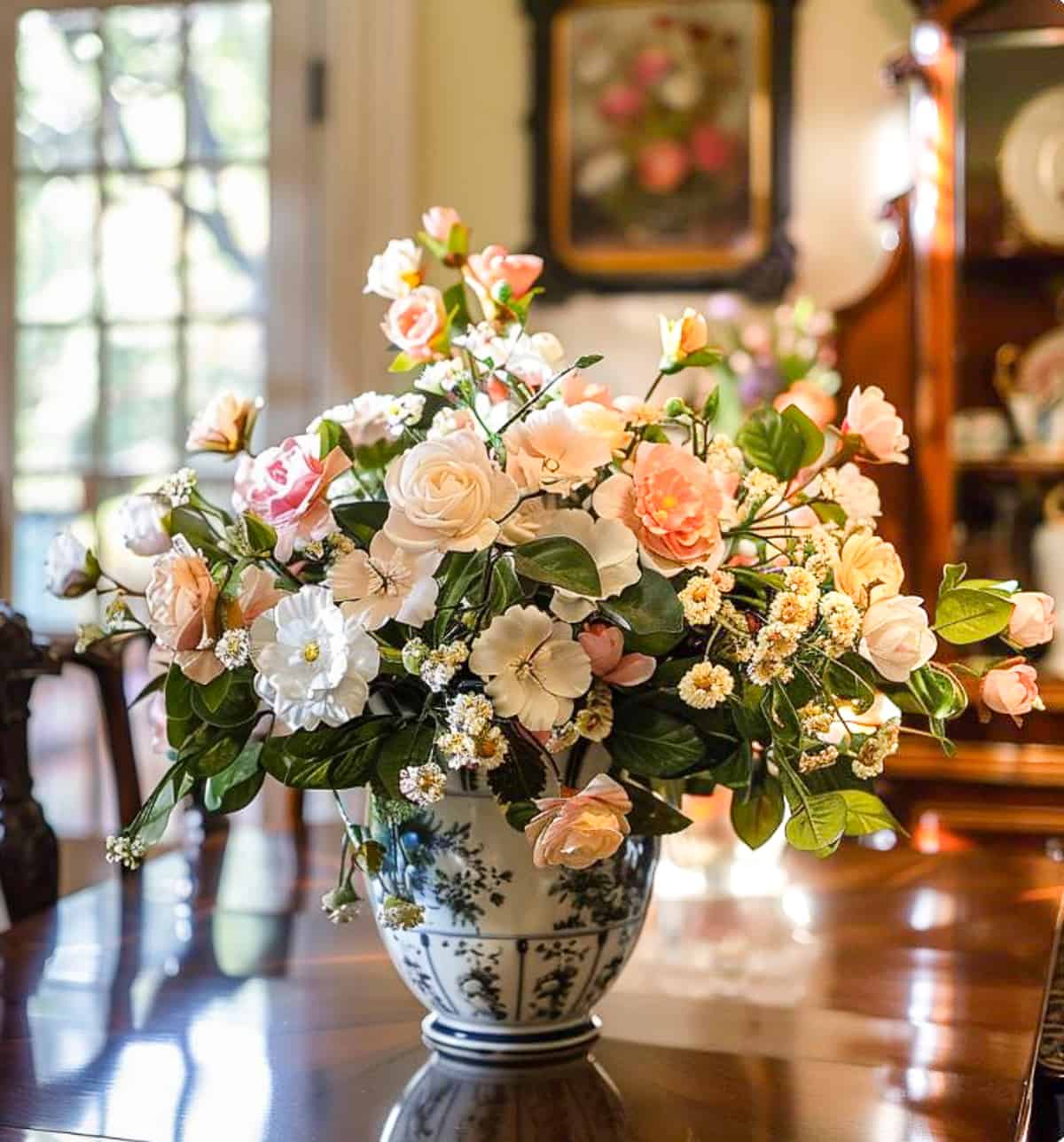
Avoid combining a highly decorative vase with extremely colorful flowers unless you’re deliberately creating an eclectic look.
Match the container to your interior
For a modern home, try a simple geometric planter.
For a coastal-style room, consider a light ceramic or woven container.
For a rustic interior, natural textures such as wood or woven materials can complement tropical greenery.
5. Use Tropical Flowers as Accent Decor
You don’t need a huge floral display to create a tropical atmosphere.
Smaller arrangements can be placed strategically around the home.
Try a small tropical arrangement on:
- A coffee table
- Bedside table
- Bathroom counter
- Kitchen island
- Entryway console
- Bookshelf
- Home office desk
The goal is to introduce the tropical aesthetic without making the entire room revolve around it.
6. Let Neutral Rooms Do the Work
Tropical flowers look particularly striking against neutral interiors.
A room featuring white, cream, beige, gray, or light wood can provide the perfect background for colorful flowers.
For example, a neutral living room with a simple orange-and-green arrangement can feel vibrant without becoming visually chaotic.
This works because the flowers become the accent rather than competing with the surrounding decor.
A simple formula:
Neutral room + natural textures + one colorful floral accent = sophisticated tropical style.
7. Don’t Put Tropical Flowers Everywhere
One common decorating mistake is repeating the same tropical theme in every room.
You don’t necessarily need tropical flowers in:
- The living room
- Bedroom
- Bathroom
- Kitchen
- Hallway
- Dining room
- Office
Choose one or two areas where they can have the greatest impact.
For example, you might create a dramatic arrangement in the living room and use a smaller arrangement in the entryway.
This creates a connection between spaces without making your home feel themed.
8. Choose Flowers Based on the Room
Different tropical flowers work better in different spaces.
Living Room
Use larger statement flowers such as birds of paradise or orchids.
A tall floor arrangement can fill an empty corner, while a medium-sized arrangement can work on a console table.
Bedroom
Choose softer colors and smaller arrangements.
White orchids, pale pink flowers, or subtle greenery can create a relaxed atmosphere.
Dining Room
Keep arrangements low enough that they don’t interfere with conversation across the table.
A compact tropical centerpiece can add color while keeping the dining area functional.
Entryway
This is a great place for a dramatic arrangement because it creates an immediate visual impression when someone enters your home.
Bathroom
Small tropical arrangements can bring warmth to an otherwise functional space.
A compact orchid arrangement or greenery-focused display can work especially well.
9. Mix Textures Instead of Adding More Flowers
If an arrangement feels empty, your first instinct might be to add more flowers.
Instead, try adding texture.
Combine:
- Large leaves
- Small greenery
- Different petal shapes
- Natural-looking branches
- Decorative grasses
Texture creates depth without necessarily increasing the number of colors.
This is especially useful when decorating with artificial flowers because well-designed arrangements can look full and dimensional without containing dozens of blooms.
10. Follow the Rule of Visual Breathing Room
Every decorative arrangement needs space around it.
If a large tropical arrangement is pushed between several pieces of furniture, artwork, lamps, and accessories, it may look cluttered.
Give your arrangement room to stand out.
For example, place a large arrangement beside a relatively simple console rather than covering the entire console with decorative objects.
Less competition means more impact.
11. Coordinate Flowers With Existing Decor
You don’t have to redesign an entire room to accommodate tropical flowers.
Instead, look at the colors that already exist in your space.
If your room has:
- Green cushions → introduce green foliage
- Beige furniture → use cream or soft-colored flowers
- Wooden furniture → pair flowers with natural containers
- Gold accents → consider warm yellow or cream blooms
- Blue decor → choose white flowers with greenery
The flowers should feel like part of the existing design rather than an unrelated addition.
12. Use Different Heights for a Natural Look
If you’re creating an arrangement with multiple stems, avoid positioning every flower at exactly the same height.
Different heights create movement and make an arrangement appear more natural.
Try combining:
- Tall statement stems
- Medium-height flowers
- Shorter filler elements
- Large leaves around the base
You can also use varying heights across different arrangements in the same room.
For example, a tall floor arrangement can be paired with a small tabletop arrangement rather than two equally tall displays.
13. Be Careful With Tropical Patterns
Tropical flowers don’t necessarily need to be paired with tropical-print furniture, wallpaper, curtains, and cushions.
In fact, combining too many tropical elements can quickly create a themed look.
If you already have tropical-patterned cushions or wallpaper, keep your flowers relatively simple.
Conversely, if your room is mostly neutral, you have more freedom to use dramatic flowers.
Think accent, not theme.
This is one of the easiest principles to follow when decorating with tropical artificial flowers.
14. Make Artificial Flowers Look More Natural
High-quality artificial flowers can look remarkably realistic, but presentation matters.
Avoid arranging every stem perfectly symmetrically.
Instead:
- Slightly vary stem heights
- Bend stems where appropriate
- Mix flowers with greenery
- Avoid overcrowding
- Dust the arrangement regularly
- Use realistic-looking containers
- Keep arrangements appropriate to the scale of the room
The goal isn’t perfection. A slightly irregular arrangement often looks more natural.
15. Consider the Size of Your Room
Scale is particularly important with tropical flowers.
A large arrangement can look impressive in a spacious living room but overwhelming in a small apartment.
Before purchasing an arrangement, consider:
Ceiling height: Tall arrangements work particularly well in rooms with higher ceilings.
Floor space: A large planter shouldn’t obstruct walkways.
Furniture size: A tiny arrangement can disappear beside oversized furniture.
Visual weight: Large leaves and colorful flowers naturally attract attention, so consider what else is competing for attention.
When in doubt, start smaller. You can always build up the arrangement later.
16. Create a Tropical Look Without Bright Colors
“Tropical” doesn’t necessarily mean colorful.
You can create a sophisticated tropical aesthetic using primarily:
- White flowers
- Cream flowers
- Green foliage
- Natural wood
- Beige textiles
- Rattan
- Woven accessories
This approach works particularly well for minimalist, coastal, modern, and Scandinavian-inspired interiors.
For example, white orchids combined with large green leaves can create a tropical feeling while maintaining a calm and sophisticated appearance.
17. Refresh Your Arrangement Seasonally
One advantage of artificial flowers is that you can change your decor without replacing the entire collection.
During spring and summer, you might use brighter tropical colors.
During fall, consider warmer tones.
For winter, white flowers and deep green foliage can create an elegant seasonal arrangement.
You can also rotate arrangements between rooms to give your home a refreshed appearance.
18. Common Mistakes to Avoid
Using Too Many Colors
A rainbow of tropical flowers can easily become overwhelming. Choose two or three primary colors instead.
Choosing the Wrong Scale
An oversized arrangement in a small room can dominate the entire space.
Overcrowding a Surface
If the flowers are surrounded by candles, frames, books, sculptures, and other accessories, their impact gets lost.
Using Identical Arrangements Everywhere
Repetition can make your decor feel artificial. Vary the size, placement, and composition.
Ignoring the Container
Even beautiful flowers can look less sophisticated when placed in a container that doesn’t complement the room.
Forgetting Maintenance
Artificial doesn’t mean maintenance-free. Dust can accumulate on leaves and petals, making even high-quality flowers look less realistic.
How to Create a Sophisticated Tropical Look: Quick Formula
If you’re unsure where to start, use this simple formula:
Step 1: Choose one focal point.
Step 2: Select two or three complementary colors.
Step 3: Add greenery for balance.
Step 4: Use a simple, complementary container.
Step 5: Leave plenty of empty space around the arrangement.
Step 6: Coordinate the flowers with existing furniture and accessories.
Step 7: Avoid repeating large arrangements throughout the room.
This approach allows tropical flowers to enhance your interior rather than dominate it.
Final Thoughts
Decorating with tropical artificial flowers doesn’t have to mean turning your home into a tropical-themed space. The most sophisticated approach is to use them selectively, balance vibrant blooms with greenery and neutral colors, and choose arrangements that match the scale and style of your room.
Whether you’re adding a dramatic arrangement to an entryway, a small orchid display to a bedroom, or greenery to an empty living-room corner, restraint is what makes tropical decor work.
For realistic-looking options that make it easier to bring long-lasting floral accents into your home, explore the selection from Fake Flowers. With the right flowers, placement, and styling, you can enjoy the lush character of tropical greenery while keeping your home’s overall look elegant, balanced, and inviting.