
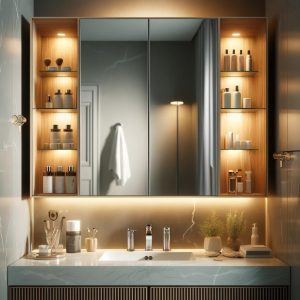


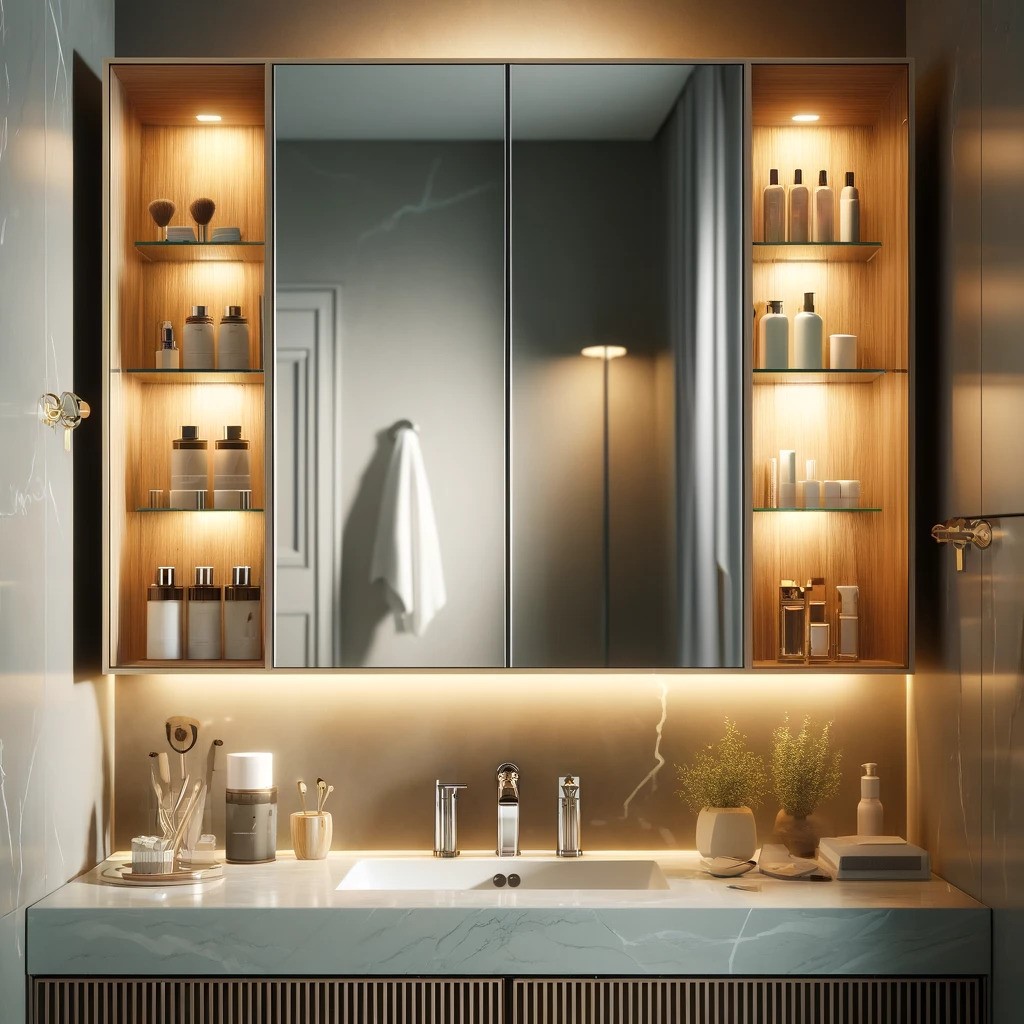
Bathroom layouts rarely have room to spare, which is why a mirror with medicine cabinet design has stayed popular for decades. Instead of mounting a standalone mirror and a separate storage unit, one fixture handles both jobs, freeing up wall space that would otherwise go to a second piece of hardware.
One Fixture, Two Jobs
The appeal is straightforward: a mirrored door hides everyday clutter, toothpaste, medication, skincare, without giving up the reflective surface most people want directly above the sink. For smaller bathrooms, this matters more than it sounds. A separate mirror plus a linen closet or open shelf setup can eat into a room that’s already tight on square footage, while a combined unit keeps the vanity wall doing double duty.
It also simplifies the buying decision in a good way. Rather than sourcing a mirror and a cabinet separately and hoping the finishes match, a single unit guarantees the frame, hardware, and glass are all designed to work together.
What to Look for Beyond the Mirror
Once the basic concept makes sense, the differences between individual products come down to a few details worth checking on any product page:
- Mirror clarity and anti-fog treatment. A coated mirror stays usable right after a hot shower instead of clouding over.
- Door hardware. Soft-close hinges and magnetic catches keep the door from slamming shut and hold it flush without a mechanical latch that eventually loosens.
- Shelf configuration. Adjustable or removable shelves make it easier to fit taller bottles or reorganize as needs change, rather than being locked into fixed shelf heights.
- Frame and finish. Matte black, brushed nickel, and stainless steel are common options, and matching the finish to existing faucet and hardware hardware ties the room together visually.
- Optional built-in lighting. Some models in this category add LED lighting around or behind the mirror, which is worth considering if the surrounding fixture won’t provide enough light at the sink.
Recessed vs. Surface Mount
Installation type affects both appearance and effort. Recessed units sit inside the wall cavity for a flush, built-in look, but they require enough depth between studs, which isn’t guaranteed in every home, especially older construction. Surface-mount units sit on top of the wall and project out slightly further into the room, but they’re considerably easier to install since there’s no need to open up drywall or work around existing plumbing and wiring inside the wall.
Neither option is universally better. A full renovation with the wall already open is a reasonable time to consider recessed mounting, while a straightforward swap of an existing cabinet is usually simpler with a surface-mount replacement of a similar size.
Sizing relative to the vanity below also matters more than people expect. A cabinet noticeably narrower than the sink area looks out of proportion once installed, so measuring the vanity width and centering the unit above it is worth doing before ordering rather than after.
The Takeaway
Choosing a mirror with medicine cabinet design over separate pieces is mostly a matter of practicality: less wall space used, matched finishes, and one less thing to coordinate during a remodel. The differences that actually affect day-to-day use come down to hardware quality, mounting type, and whether the shelf layout fits what’s actually going to be stored. Shoppers comparing options across brands, including Allsumhome, will usually find the units that hold up over time are the ones where these fundamentals were handled well, not necessarily the ones with the most elaborate frame design.