


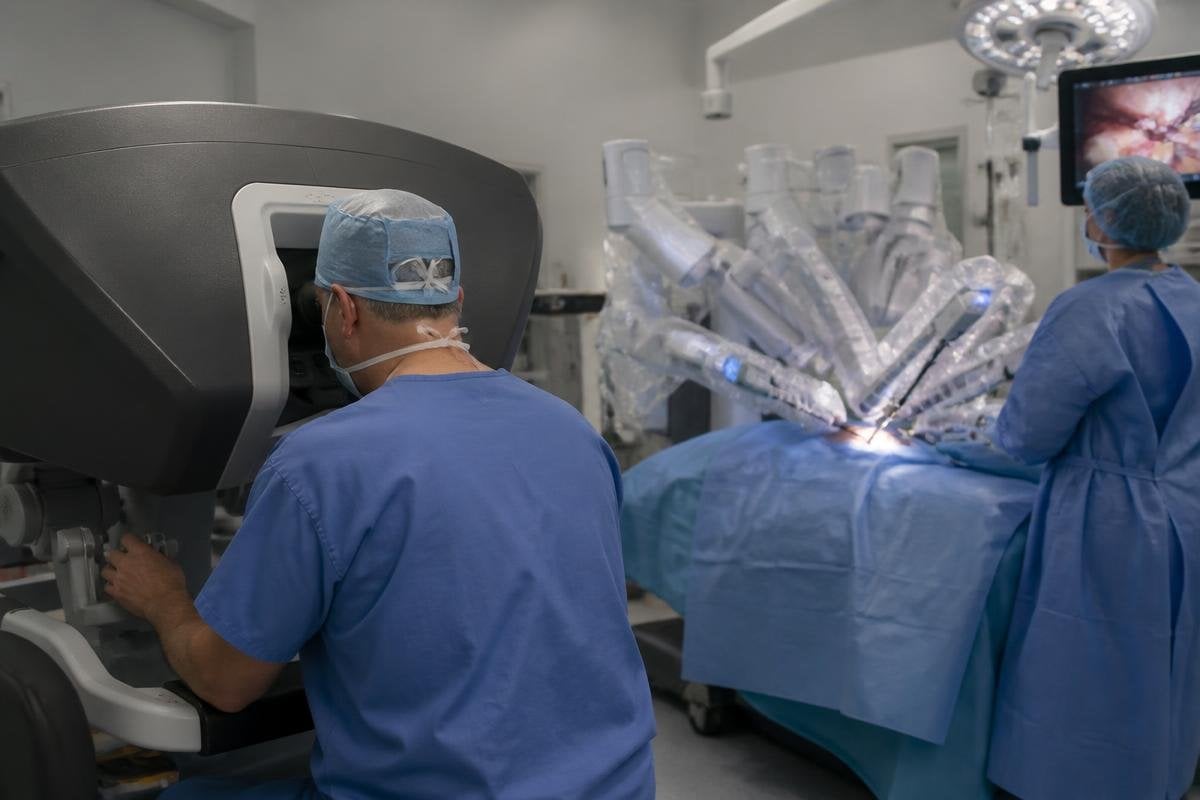
Surgical robots can now help place instruments, read images, and guide movement inside the body. The software matters, but the surgeon still chooses the procedure, directs the robot, and accepts responsibility for each step.
- Image software can mark tissue and organs during an operation
- Robotic arms can filter hand tremor and repeat measured movements
- Full autonomous surgery remains outside normal hospital practice
Where AI fits in the operating room
Most surgical robots do not operate on their own. A surgeon sits at a console or works beside the patient, then sends commands to robotic arms that hold cameras and instruments.
AI can sit inside that control system in several ways. It can read medical images, help identify anatomy, track the position of tools, or warn when an instrument moves near a marked area. The exact job depends on the robot, its software, and the approval granted by health authorities.
That distinction matters for hospitals. A system that marks a structure on an image has a different safety case from one that moves a cutting tool. The first may support a decision. The second affects tissue directly and needs tighter checks.
What the robot changes for surgeons
Robotic arms give the surgeon a stable tool position and a wide range of movement. Many systems also scale hand motion, so a larger movement at the controls can become a smaller movement at the instrument tip. Filters can reduce small hand tremors.
The robot can also keep a camera steady while the surgeon works through small openings. A high-definition view may help the team see the operating area, but image quality alone does not prove better patient results. That evidence must come from clinical trials and follow-up data for the specific procedure.
AI adds another layer by working with images and motion data. A program may mark the edge of a tumor or track a tool during a task, while the surgeon checks whether the software’s reading fits the patient in front of them.
Why hospitals are moving carefully
Surgery has little room for software errors. Patient anatomy varies, camera lighting can change what the system sees, and tools can block part of the image.
Training data may also come from a narrower group of patients than the hospital treats. A hospital must check more than the robot’s arm movement. It needs to review how the software was tested, what happens when sensors disagree, how staff take control during a fault, and which cases the maker excludes.
For a hospital, a software feature matters only after it survives tests on the cases surgeons actually treat. Robot24.com reports can put the named system, procedure, hospital, and test date beside each claim before the next section examines the limits behind the label.
The limits behind the label
The words “AI-powered” cover a wide range of tools. In one system, AI may sort images before a clinician reviews them. In another, it may help plan a path for an instrument. Those are useful functions, but they do not mean the robot understands the full operation.
Autonomous movement raises harder questions. The software must detect anatomy, handle unexpected bleeding, respond to tool failure, and know when its own estimate is unsafe. A human surgeon can still face a rare case that the software has never seen in training.
The maker’s approval documents should state the system’s intended use. They should also state what the surgeon must do, what the software can do without a command, and how the team can stop or override it. If those details are hard to find, the label tells you less than the controls do.
A hospital’s adoption checklist
Before a surgical team brings in an AI-assisted robot, check these points:
- Define the task: name the procedure and the exact step the software will support
- Review the evidence: separate lab tests, clinical studies, and routine hospital results
- Set human control: confirm who can pause the robot and how fast they can take over
- Test failure cases: run sensor faults, lost image data, tool errors, and power loss
- Train the whole team: include surgeons, nurses, anesthetists, and technical staff
- Track outcomes: record complications, repeat surgery, operating time, and software errors
I’d judge a surgical robot by its failure handling before its autonomy claims. A useful system should tell the team when its view is uncertain and return control without delay.
The next stage will depend on clinical evidence for each task, not on the label attached to the software. Hospitals will need clear limits, trained teams, and measured patient results before they allow a robot to make more decisions inside an operation.